
Obsession (2026)
Everyone’s wishing on it - I’d watch where you’re sitting.

There’s a movie out right now called Obsession, and people have lost their minds over it. The word that keeps coming up is original. The answer to our prayers. The thing that’s going to change everything, the way Blair Witch was going to change everything, the way Sex, Lies, and Videotape was going to change everything. The young have made it a phenomenon. The seasoned have lined up to bless it. I went in ready to be delighted.
I came out feeling like I needed a shower.
The setup is a quiet, dorky kid named Bear, in love with his best friend Nikki, who likes him fine and feels nothing else. He gets hold of a thing called a One Wish Willow — a little branch you snap in two and make a wish on, the kind of object kids apparently believe in now. He breaks it and wishes that Nikki would love him more than anyone in the world. The wish comes true, and the love that comes true is a horror show. She becomes obsessive, devoted past all reason, dangerous. People are imperiled.
For about twenty minutes it’s mildly clever and mildly funny, and I’ll be honest with you, I laughed. I want that on the record, because what came after only means anything if you know I went in willing.
Then something curdled. It took me a while to name it, and I spent the back half of the movie naming it, which is not how you’re supposed to spend a movie.
The girl is not a monster. That’s the thing. Horror, when it does this, at least has the decency to make its women terrifying — to grant them power, to be afraid of them. This film isn’t afraid of her. It pities her. It makes her ridiculous. She isn’t dangerous the way a storm is dangerous; she’s pitiful the way a kid is pitiful when a circle of other kids has decided to make her the joke. And there is no sympathy anywhere in the frame. The camera doesn’t grieve her. It smirks. You are not watching her. You are seated with the people laughing at her, and the seat was assigned to you the moment you bought the ticket.
And here is what I couldn’t get past, and what I think a lot of people cheering this thing haven’t bothered to notice.
He made the wish.
The whole catastrophe is his. He’s the one who reached for a magic object to manufacture a love he hadn’t earned. He authored her devotion. He wrote her into being as the worshipping thing she becomes. And then the film takes the disaster he engineered and hangs it entirely on her. Her obsession isn’t something she chose — it’s what happens when you wish total love onto a person and actually get it. But the movie never once turns to look at the boy who pulled the lever. It keeps him sympathetic and it makes her the freak. His appetite is the given nobody questions. Her response to his appetite is the spectacle. He gets to want. She gets to be the punchline for having been wanted at gunpoint.
This isn’t really a love story that goes wrong. It’s a man wishing away a woman’s will so he can keep the body without the person inside it — and the film half-knows this. It even gives him a moment that admits choosing this for her doesn’t make what’s happening to her any less real. And then it lets him off anyway. He stays the nice guy. He stays the one we’re rooting to be loved. Move the camera one notch — point it at the wish instead of at the girl — and there is no comedy left in this movie, because the pitiful and dangerous person in the frame would be him.
Here’s where I have to be fair, because a review I admire — written by someone who cares far more than I do about how women are shown on a screen — loved this film, and loved it for the exact thing that finished it for me.
She praised the way the director keeps letting the real Nikki surface and then sink again under the spell. Surface, and sink. Surface, and sink. So that you can see, again and again, the woman who never wanted him still alive in there. She read those moments as the film’s tenderness, its proof that Nikki is a real person and not a cartoon.
Run it cold. What you are being shown, on purpose, over and over, is a woman’s actual will rising up to refuse him and being forced back down. The clearer her no, the harder the wish has to crush it. It takes a genuine performance to make that legible, and the actress gives one — which doesn’t soften the thing, it sharpens it. The better she plays the self being erased, the more plainly you are watching a refusal overridden in real time and being asked to find it poignant. Those surfacing moments aren’t the film’s conscience. They’re the cruelty getting more precise. A cartoon can’t be violated. This movie built her a self specifically so you could watch it taken. It felt like I paid $22 to watch someone be drowned, live.
I sat with that for a while, because I don’t like being the only one in the room. It turns out I’m not. The film has split the people who took it seriously, and split them along this exact seam. Some read it the way that critic did — a sharp indictment of the entitled nice guy. I understand the reading; the movie hands you the materials for it. But more than one critic walked out with my discomfort, and named it harder than I have. The argument isn’t about what’s on the screen. Everyone agrees on what happens. The whole fight is about where the camera makes you sit while it happens.
The entire contents of this film can be found in a run-of-the-mill protein shake.
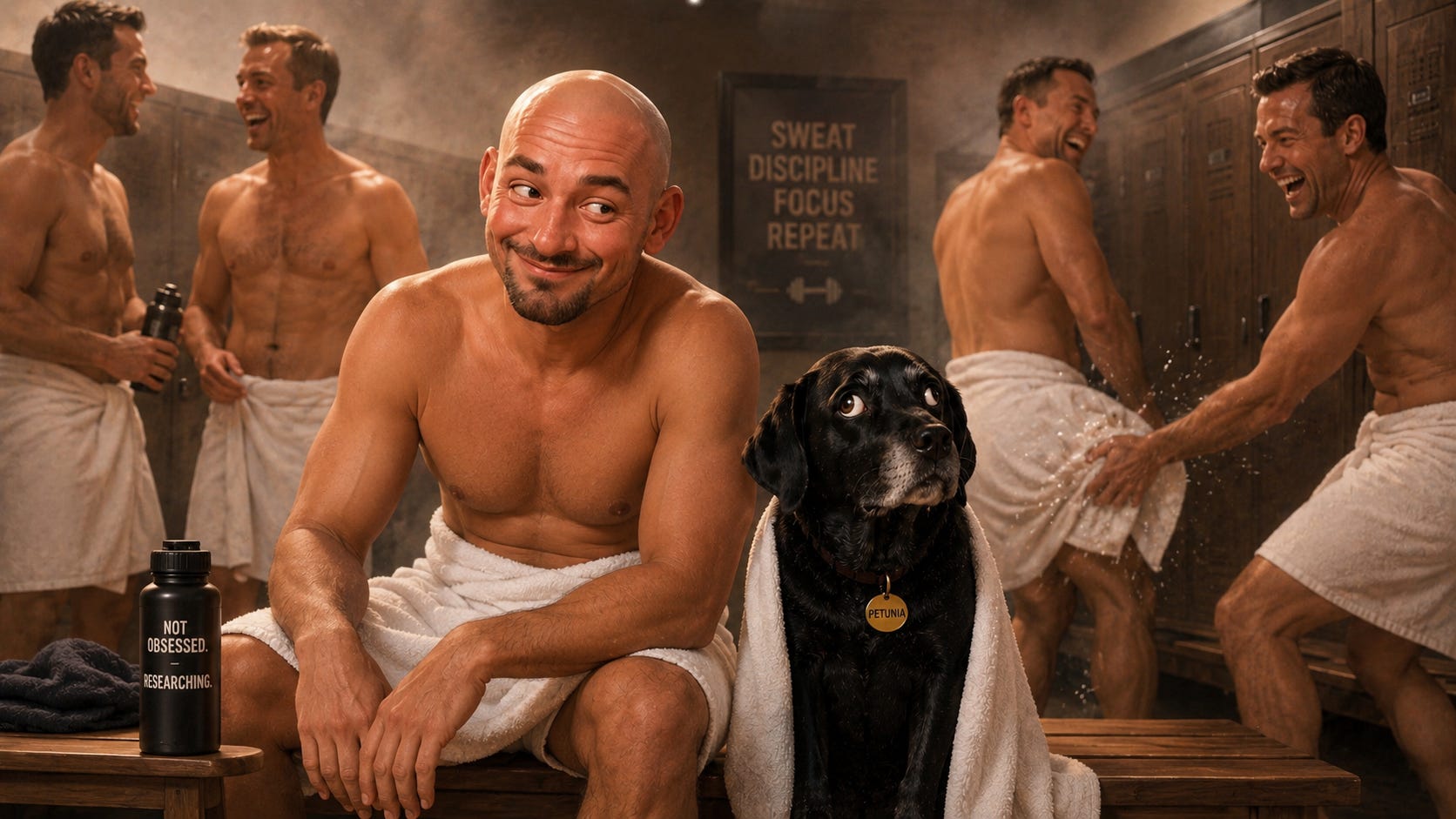
I have a workout buddy. Call him Andy. Ridiculously, almost insultingly good-looking, and never with the same woman two weeks running. He said something to me once that I’ve never quite gotten over. He said, I don’t think I’m asking too much. I just want to find somebody who will totally worship me.
I let him have it. I said, Andy, that is the worst thing I’ve ever heard you say. I wish I didn’t know this thought was in your skull. Come on, man! You can do better than that.
I thought about Andy the entire second half of this movie.
Because the wish in Obsession is Andy’s wish. It isn’t exotic. It isn’t some dark fairy-tale aberration. It’s the most ordinary thing a charming man says out loud between sets. To be worshipped. To be loved more than you’d ever have to love back. And that is not a wish for love. Love is an exchange. Love costs you something. Love exposes you. Worship is safe — the worshipper is the one out on the ledge, and the worshipped just stands there and receives. Andy wanted the version with no exposure and no exchange, and so does the boy with the trinket, and so, apparently, does a packed house on a Friday night.
But here’s the difference between Andy and the movie, and it’s the difference that lets Andy off the hook and hangs the film.
Andy said it to my face. And a friend told him it was grotesque.
That’s the system working. The ugly wish got spoken out loud in a room that happened to contain someone willing to argue back. The movie is that same wish with the friend deleted. Nobody in it ever says come on. It grants the worship, and when the worship arrives it punishes the woman for it and lets the man walk out clean. That is why I left feeling the way you feel after you’ve stood in a circle of men saying the things men only say to each other about women — things you don’t object to in the moment and are ashamed of later. The movie is the locker room with the door shut and nobody in it to object.
Except there was somebody in it. There were a few hundred of us. And we were laughing.
I keep hearing that none of this is the movie’s fault, that horror does this, that it’s just the genre. So let me put two things side by side.
There’s a show on Apple TV called Widow’s Bay. Its fourth episode belongs to a woman named Patricia — a lonely, socially cornered island misfit whose old classmates long ago decided she was a liar and a hanger-on. She finds a cursed book that promises her the acceptance she’s never had, follows it, throws a party that curdles into horror. People end up walking into the sea. It is, almost beat for beat, the same machinery as Obsession. A rejected person. A magic object. A longing for love that turns monstrous. A body count. All of it played as horror-comedy.
And it lands in the opposite moral universe. The show films Patricia’s humiliation as an injury. It will not let you laugh. You watch the shame prick her skin before the panic even arrives, and the camera stays with her, aching, while the room turns on her. The cruelty is the sickness the episode is about, not the entertainment it’s offering you. Carrie did the same thing fifty years ago — the bucket drops and the film breaks its heart. It never once hands you a rock.
That’s the whole point. The genre was never the problem. Horror has always been willing to brutalize a woman on screen. The only question any of these films answers, in how it frames the thing, is whether it wants you to ache or to laugh — whether you’re locked out of the cruelty or cut into it. Widow’s Bay locks you out. Obsession cuts you in. Same materials, opposite seat, and the seat is the entire moral content of the thing.
I keep reading that the culture is being coarsened. That something out there is making us crueler. That we’ve lost something we used to have. And then I sit in a theater and watch a few hundred people delight in the ritual humiliation of a girl who was wished into being by a boy who never gets blamed for it, and I think: nothing out there did this. No new thing made this movie. People made it. People wrote it and shot it and scored the laughs and sold the tickets, and people filled the seats and cheered. We didn’t need AI to make this film. The appetite for watching the weak one get punished is not new, and it did not arrive from anywhere. It has always been in the room, the schoolyard, the comment section, the Friday-night multiplex.
Obsession didn’t invent that appetite.
It just found it sitting there, sold it back to us, and called itself original.
“But the movie never once turns to look at the boy who pulled the lever. It keeps him sympathetic and it makes her the freak.”
You’re the second person I’ve seen who has had this reaction to the film, and felt it didn’t prioritize Nikki’s phenomenology, just exploited the abject female. I completely disagree with your reading across the board, and I think the story arc, which ends with Bear having to commit suicide to end the curse, is the best counterargument. He’s the bad guy almost immediately, even though he’s the one being haunted by a crazy lady, that’s literally the foundational subversion of the monkey’s paw trope. I don’t think other people are missing anything, I think you missed something.
Thanks for this, Calvin, I hadn’t really thought about how this film exploits the female character for our viewing pleasure. You’re right, of course, and it is sad how callous the film is towards the Nikki character. It was a good film and well acted and directed for sure, but yeah, it left a bad taste in my mouth too. Horror films are almost never uplifting, but this one was especially dank. Bear turned out to be the true villain of the film, I think that much can be said.
As much as feminists are trying to turn this into a hit piece that only applies to men behaving badly, there are plenty of women who would do the same thing that Bear did to Nikki if they were in opposite positions. If we take the film metaphorically and not literally, it is a story about someone who traps someone else in a relationship because they are lonely. Women do this to men all the time and without thought or concern for their mate’s well being. For instance, the woman who traps a good man in a relationship by getting pregnant. She knows that the relationship isn’t built on his love for her, but she goes forward anyway, because she wants the relationship at all costs. She wants to ensnare him even if it means bringing a new life into the world that neither is ready for — to my mind that is the pinnacle of evil, as it involves the sacrifice of an innocent child to preserve a relationship that was never meant to be.
I am planning my own essay about this movie. There’s a great deal to talk about in it.